
Sustainable Development

Recent global developments including the pandemic and climate change have accelerated the efforts of international organizations and major economies to achieve their sustainable growth goals, leading to the emergence of trends such as green growth and responsible finance. We are developing and implementing a business model that contributes positively to the environment, society, and the economy in line with sustainable development goals. By aligning international standards for sustainable development and green finance and expanding multilateral cooperation, we aim to attract new international funding sources while introducing sustainable solutions that provide environmentally responsible business practices and innovative financial products and services to our customers.
Sustainable development policy

By developing and approving our Sustainable Finance Policy, Transbank has strenghtened the integration of sustainable development goals and principles into both our business and internal operations. The policy defines our approach to sustainable finance, including the classification and eligibility criteria for financing activities as well as impact measurement indicators, which are implemented in the day-to-day internal operations.

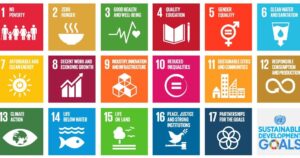
The Policy is guided by the 17 Sustainable Development Goals defined by the United Nations in 2015 and the eight principles set out in Mongolia’s Sustainable Finance Roadmap, which serve as guiding principle for our business and internal operations.

Sustainable financing

The Bank’s sustainable finance objective is to direct investment flow toward projects that clearly generate environmental and social benefits.

In this context, the Bank conducts environmental and social risk assessments for the loans we provide, with the aim of mitigating potential risks for both the Bank and its clients. As a key target, the Bank aims to increase the share of sustainable finance loans to 5 percent of its total loan portfolio by 2030.

As of the second quarter or 2024, loans newly issued under the sustainable finance framework accounted for 2.7% of the Bank’s total loan portfolio.

In implementing our environmental and social policy, Transbank complies with the with the Law of Mongolia on Environmental Protection and other relevant laws, regulations, and guidelines. In addition, the Bank aims to incorporate and adhere to the principles of the following international agreements and protocols in its operations and financial transactions, including:

    • The eight Performance Standards of the International Finance Corporation (here in after referred to as “IFC”);
    • The eight Principles of Sustainable Finance issued by the Mongolian Sustainable Finance Association (here in after referred to as “MSFA”);
    • Green Investment Principles for the Belt and Road Initiative (GIP).

The Bank does not finance activities included in the “Exclusion List” and the “Watch List” issued under the Sustainable Finance Program.

Products and services

Transbank offers the following green finance products and services that are environmentally and socially responsible to both individual and corporate customers. These include:

  1. Green Project Loan for Small and Medium Enterprises (SMEs). Click here to learn more.
  2. Eco-Friendly Electric Vehicle Loan. Click here to learn more.
  3. Loan Services for Women Entrepreneurs. Click here to learn more.
Sustainable Reporting

To support sustainability reporting and measure the impact of its financing activities, the Bank submits the following reports to the relevant regulatory authorities on a quarterly and semi-annual basis: the half-year report of members of the Mongolian Sustainable Finance Association, foreign funding reports, Green loan reports to the Bank of Mongolia, and the Bank’s green funding reports. Within the framework of its GIP membership, the Bank annually reports on the implementation of the Green Investment Principles. In addition, the Bank is preparing to calculate and disclose the greenhouse gas emissions associated with its financed activities for a selected sector under the PCAF framework.

Cooperation

Green Investment Principles for the Belt and Road Initiative
Mongolian Sustainable Finance Association

Partnership for Carbon Accounting Financials (PCAF)

Gender Equality Champion Banks

To promote gender equality, define the Bank’s gender policy, deliver inclusive financial services to its customers, and mitigate, monitor and manage risks arising from gender-related impacts on the Bank’s operations, Transbank  has adopted a Gender Equality Policy and established an internal Gender Committee to oversee its implementation.

The Gender Equality Policy is implemented in the following areas:

  1. Institutional level

Collecting and maintaining gender-disaggregated data on employees, conducting relevant analysis, and using the results in decision-making, while integrating gender-sensitive approaches into daily operations, governance and performance evaluation processes, supported by the necessary financial and human resources;

  1. Client level

The Bank incorporates gender equality considerations into its customer segmentation, market research, product development, risk assessment, and marketing activities in delivering services to our clients;

  1. Impact level

Through its operations, the Bank supports international initiatives and programs that promote gender equality and contributes to the achievement of the Sustainabnle Development Goals.

Corporate Social Responsibility

Transbank’s Corporate Social Responsibility objective is to protect interests of its customers through its operations and values in compliance with the relevant laws and regulations of Mongolia, while supporting the health, education, and development of it’s employees. Through these efforts, the Bank aims to make a long-term, continuous and responsible contributions to society, the economy and the environment.

We implement our Corporate Social Responsibility policy across the following five areas:

  1. Education
  2. Health
  3. Environment
  4. Human Rights
  5. Transparency and Accountability